What is triac used for? It finds applications in switching, phase control, chopper designs, brilliance control in lamps, speed control in fans, motors etc. Applications of Triac Next to SCR, the triac is the most widely used member of the thyristor family. In fact, in many of control applications , it has replaced SCR by virtue of its bidirectional conductivity. Motor speed regulation, temperature control, illumination control, liquid level control, phase control circuits, power switches etc.
As we know that the SCR as a unidirectional device and has a reverse blocking characteristics that prevents the current flow in reverse biased condition. But for many applications, bidirectional control of current is require particularly in AC circuits. To achieve this with SCRs, two SCRs must be connected in anti-parallel to control over both positive and negative half cycles of the input.
These are often used in motor speed controllers, AC circuits, pressure control systems, light dimmers and other AC control equipments. See full list on electronicshub. The triac is an important member of the thyristor family of devices. TRI means that the device consisting of three terminals and AC means that it controls the AC power or it can conduct in both directions of alternating current.
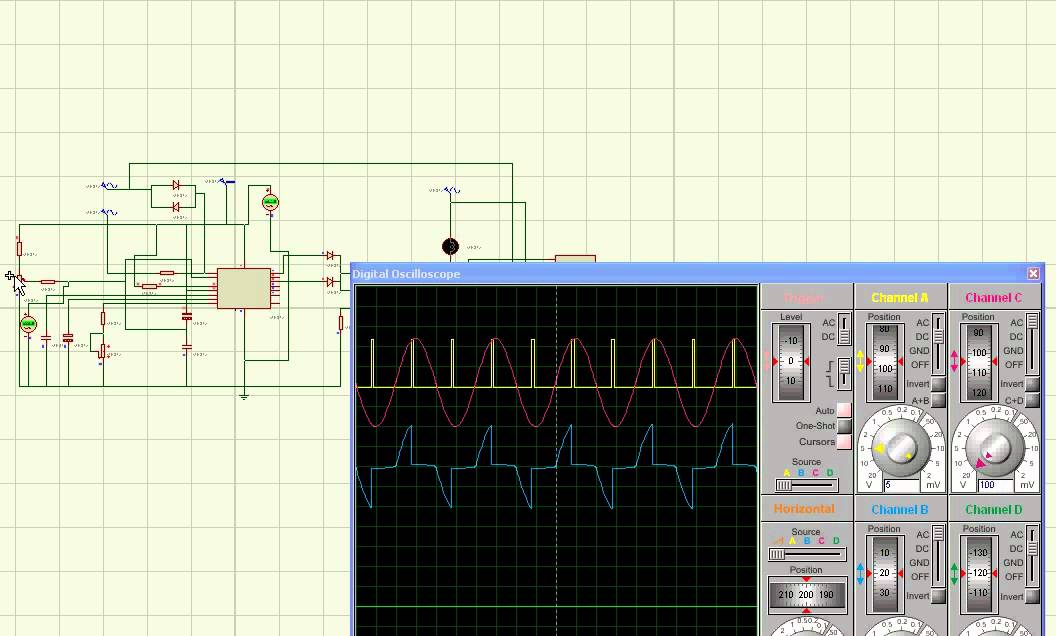
The triac has three terminals namely Main Terminal 1(MT1), Main Terminal (MT2) and Gate (G) as shown in figure.